ADA-Accessible Websites in Arizona: 2026 Guide

If you own a business in Scottsdale, Arizona, here's something that might surprise you: your website could be violating federal law right now — and you'd have no idea until a demand letter lands in your inbox. ADA compliant website Scottsdale is no longer just a buzzword for tech companies or government agencies. It's a real, growing legal and business issue that affects med spas on Scottsdale Road, law firms near Old Town, real estate agencies in North Scottsdale, and virtually every other business with a website. In 2026, the stakes are higher than ever. This guide breaks down exactly what ADA website compliance means, why Scottsdale businesses are especially exposed, and — more importantly — how you can turn accessibility into a genuine competitive advantage.
What Is ADA Website Compliance? A Plain-English Explanation
The Americans with Disabilities Act (ADA) was signed into law in 1990 to prohibit discrimination against people with disabilities. At the time, the internet barely existed. But as the web became the primary way people access goods, services, and information, the U.S. Department of Justice (DOJ) made clear that the ADA applies to websites too — not just physical storefronts.

In April 2024, the DOJ published a landmark final rule formally requiring web content and mobile apps to meet a specific technical standard: WCAG 2.1 Level AA. WCAG stands for Web Content Accessibility Guidelines — a globally recognized framework developed to ensure websites are usable by people with visual, auditory, motor, and cognitive disabilities. While the 2024 rule technically targets state and local government entities, it sets a concrete benchmark that courts and plaintiffs are already using to evaluate private business websites as well.
WCAG 2.1 is built around four core principles, often called POUR:
Perceivable — Information must be presentable in ways all users can perceive (e.g., alt text for images, captions for videos)
Operable — Users must be able to navigate and interact with the site (e.g., full keyboard navigation)
Understandable — Content and interfaces must be easy to understand (e.g., clear labels, readable fonts)
Robust — Content must be reliably interpreted by assistive technologies like screen readers
If your website doesn't meet these standards, it's not just a technical gap — it's a legal liability.
Why Scottsdale Businesses Are Especially at Risk in 2026
Scottsdale isn't just a beautiful desert city — it's a dense, competitive business market with a demographic profile that makes ADA compliance particularly important. The city is home to a high concentration of industries that serial ADA plaintiffs specifically target: medical spas, restaurants, law firms, real estate agencies, hospitality businesses, and retail boutiques. These businesses often have visually rich websites built years ago, when accessibility wasn't on anyone's radar.
Here's the uncomfortable reality: over 4,000 ADA website lawsuits were filed federally in a single recent year, and that number continues to climb. Demand letter mills — firms that systematically scan thousands of websites for accessibility violations and send threatening letters — have made this a volume business. Small businesses are often targeted precisely because they're more likely to settle quickly rather than fight an expensive legal battle.
According to WebAIM's annual accessibility report, 96.3% of the top one million websites fail basic accessibility tests. If that statistic holds for the broader web, the odds are overwhelming that your Scottsdale business website has at least some violations right now.
Add to this the fact that Arizona's public institutions are already racing to meet WCAG 2.1 AA deadlines. Arizona K–12 school districts with populations of 50,000 or more must comply by April 2026. The University of Arizona set an internal deadline of April 2026 for its own digital properties. The City of Chandler — right in your backyard — has already required all vendors and contractors to submit Accessibility Conformance Reports. The message from Arizona's public sector is loud and clear: accessibility is no longer optional.
For private Scottsdale businesses, this creates both a warning and an opportunity. The legal environment is tightening. But most of your competitors haven't acted yet.
The Most Common ADA Website Violations (Is Your Site Guilty?)
Most accessibility violations aren't exotic edge cases — they're simple, fixable issues that were overlooked during the original web design process. Here are the most common problems found on Scottsdale business websites:

Missing alt text on images — Screen readers describe images to visually impaired users using alt text. If your images have no alt text, those users get nothing. This is the single most common violation found across the web.
Poor color contrast — WCAG requires a minimum contrast ratio of 4.5:1 between text and its background for normal-sized text. Many beautiful, on-brand Scottsdale websites use light gray text on white backgrounds — which fails this test entirely.
No keyboard navigation — Users who cannot operate a mouse must be able to tab through your entire site using only a keyboard. Most websites built with standard templates don't support this out of the box.
Videos without captions — Any video on your site — promotional content, tutorials, testimonials — must include accurate captions for users who are deaf or hard of hearing.
Forms without proper labels — Your contact form, booking form, or newsletter signup may look fine visually, but if the fields aren't properly labeled in the code, screen readers can't identify them.
Inaccessible PDFs — Menus, brochures, service guides, and downloadable documents posted on your website must also be accessible. A scanned image of a menu, for example, is completely inaccessible to screen readers.
No skip navigation links — These hidden links allow screen reader users to skip past repetitive header navigation and jump directly to the main content of a page.
Auto-playing media — Videos or audio that play automatically can be disorienting or even harmful for users with certain cognitive or sensory disabilities, and they violate WCAG guidelines.
Any one of these violations could be cited in a demand letter. Most websites have several.
The Business Case: ADA Compliance Wins You More Customers
Here's where the conversation shifts from risk management to growth strategy. ADA compliance isn't just about avoiding lawsuits — it's about opening your business to a larger audience.

According to the CDC, 1 in 4 American adults lives with some form of disability. That's 25% of your potential customer base. In Scottsdale specifically, the demographic picture is even more compelling. The city attracts a significant population of retirees and snowbirds — older adults who are more likely to experience age-related vision, hearing, or motor challenges that make accessibility features genuinely useful. An accessible website isn't just for people who identify as disabled; it serves anyone who struggles to read small text, uses voice navigation, or browses on a low-contrast screen in bright Arizona sunlight.
Beyond the direct audience expansion, accessible websites rank better in search engines. Google's algorithm rewards many of the same technical qualities that make a site accessible: proper heading structure, descriptive alt text, fast load times, clean code, and mobile-friendly design. When you invest in website accessibility Scottsdale AZ, you're simultaneously improving your SEO — which means more organic traffic, better local rankings, and more qualified leads finding your business first.
There's also a brand trust dimension. Today's consumers — especially in a market as sophisticated as Scottsdale — increasingly favor businesses that demonstrate inclusivity and social responsibility. An accessibility statement on your website signals that you take all customers seriously. That's a differentiator that your competitors who ignore this issue simply can't claim.
WCAG 2.1 Compliance Levels, Simply Explained
WCAG 2.1 has three conformance levels. Here's what they mean for a typical Scottsdale business:
Level A — The absolute minimum. Covers the most critical barriers that make a website completely unusable for some users. Not sufficient for legal compliance on its own.
Level AA — The standard that courts, the DOJ, and plaintiffs use as the benchmark for legal compliance. This is what your website needs to meet. It covers issues like color contrast, captions for live audio, and consistent navigation.
Level AAA — The highest level of accessibility. Exceeds legal requirements and is generally not expected of most private businesses, though elements of it are best practice.
For practical purposes: your goal is WCAG 2.1 Level AA. That's the standard Arizona's public institutions are racing to meet, and it's the standard that will protect your business legally while delivering the best user experience.
Can You Test Your Own Website?
Yes — to a point. Several free tools can give you a starting baseline:
WAVE (wave.webaim.org) — Visual accessibility evaluation tool
axe DevTools — Browser extension for developers and non-developers alike
Google Lighthouse — Built into Chrome's developer tools, includes an accessibility audit
However, there's a critical limitation: automated tools only catch approximately 30% of accessibility issues. The rest require human judgment — someone who understands how screen readers behave, how keyboard navigation flows through a real interface, and how cognitive accessibility principles apply to your specific content. Automated tools are a starting point, not a finish line.
Your 2026 ADA Accessibility Action Plan
The good news: you don't need to spend six months and a small fortune to get compliant. Many of the most impactful fixes can be implemented quickly by an experienced development team. Here's a practical roadmap:
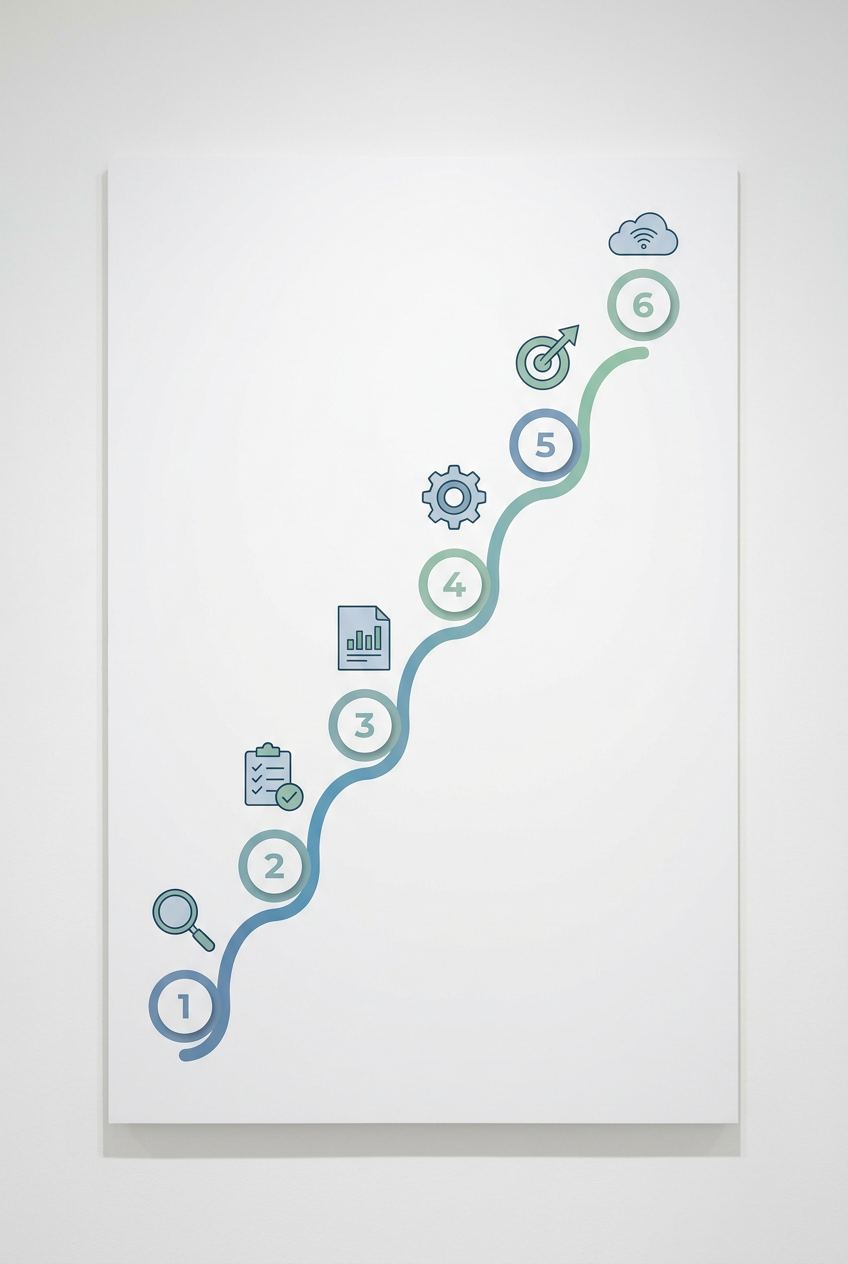
Step 1: Run a Free Automated Audit
Start with WAVE or Google Lighthouse to get a quick snapshot of your current violations. This gives you a baseline and helps prioritize where to start. Don't be alarmed by the results — almost every site has issues, and knowing is half the battle.
Step 2: Prioritize Critical Violations First
Focus on the highest-impact, most commonly cited issues first: alt text, color contrast, keyboard navigation, and form labels. These are the violations most likely to appear in a demand letter and the ones that most broadly affect your users.
Step 3: Add an Accessibility Statement to Your Website
An accessibility statement signals your commitment to compliance, provides a contact method for users who encounter barriers, and demonstrates good faith — which matters legally. This is a simple page that takes minimal time to create.
Step 4: Get a Professional Accessibility Audit
Because automated tools miss the majority of issues, a professional audit by a team that understands both WCAG 2.1 and your business context is essential. This should include manual testing with actual screen readers and keyboard-only navigation.
Step 5: Implement Fixes with a WCAG-Experienced Developer
Not every web developer understands accessibility. Remediation requires someone who can work at the code level — adjusting ARIA labels, restructuring heading hierarchies, updating color palettes, and ensuring interactive elements are keyboard-accessible. This is where working with a team that specializes in accessible web design Scottsdale makes a significant difference.
Step 6: Schedule Ongoing Monitoring
Accessibility isn't a one-time project. Every time you add new content, update your site, or integrate a new tool, you create potential new violations. Regular monitoring — quarterly audits, automated scanning, and developer awareness — keeps your site compliant over time and protects you as standards evolve.
The Bottom Line for Scottsdale Business Owners
The legal landscape around ADA website compliance in Arizona has shifted decisively. The DOJ has published formal WCAG 2.1 AA standards. Arizona's schools, universities, and municipalities are meeting compliance deadlines in 2026 and 2027. Serial plaintiffs are actively scanning business websites for violations. And 96% of websites — including almost certainly yours — have accessibility issues right now.
But here's the reframe that matters most: the Scottsdale business owners who act now aren't just avoiding legal risk. They're building websites that serve more customers, rank higher in search results, and signal a level of professionalism and inclusivity that competitors who ignore this issue simply can't match. In a market as competitive as Scottsdale, that's not a small advantage.
"Accessibility is not a feature. It's a baseline expectation — and in 2026, the businesses that treat it that way will be the ones that win."
At C Dell, we specialize in building and remediating websites for Scottsdale and Phoenix-area businesses that are not only visually stunning and conversion-optimized, but technically compliant with WCAG 2.1 AA standards. Our founder Christopher Dell'Olio has built digital products used by hundreds of thousands of users — and our team knows exactly what it takes to make a website both accessible and effective. Whether you need a full accessibility audit, targeted remediation, or a ground-up redesign that bakes compliance in from day one, we're ready to help. Contact C Dell today for a free ADA website audit and find out exactly where your site stands — before someone else does. Visit us at c-dell.com or reach out to our team at our Scottsdale office to get started.